Feline Obesity
A fat cat is not an elegant animal. Aside from appearance, these animals can suffer from medical complications. Just about every organ in the body maybe affected by obesity, but most at risk are the musculoskeletal, cardiovascular, and respiratory systems. Some of these complications include diabetes, heat stroke, heart trouble, hypertension, joint problems (arthritis), breathing problems, and even skin problems.
Obesity results when an animal continuously consumes more calories than needed. Our pets pack on the pounds for the same reasons we do; consumption of an excess of calories and not nearly enough exercise. Snacks, treats, and table scraps high in fat don't help matters, either.
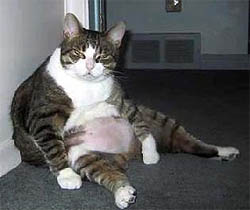
There are also hormonal influences, genetic influences, and individual variation in metabolism and appetite that can cause obesity. Unfortunately the most frequent cause of obesity in pets is owner indulgence of treats and/or oversized portions of pet food.
Cats use fat as their primary energy source. A cat that consumes more calories than is needed will store this excess as fat. An overweight cat that consumes his (or her) calories in the form of fat is predisposed to putting on more weight than a cat that consumes his calories in the form of carbohydrates.
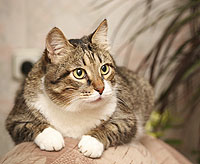
If your cat is overweight, it's a good idea to determine the amount of fat in the present food. Changing to a food with a larger amount of (highly digestible) carbohydrate is a good alternative.
It is important to feed your cat a food that is not too high in fiber. High fiber foods often lack digestibility and can cause digestive problems. By feeding diets that are high in fiber, essential nutrients are not absorbed and large frequent stools are produced.
Start very slowly when changing your cat's diet. Over a period of two to three weeks, mix the new food with the old. Gradually increase the amount of new food while decreasing the amount of old food. After two to three weeks, only the new food should be fed.
An obese cat generally consumes too much food. Decreasing the quantity of food by 30 percent is a good way to start. Afterwards, decrease the food by 10 percent every three weeks until a one percent weight loss is achieved.
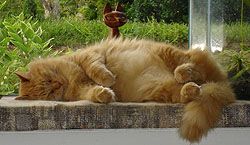
Weight reduction in cats is a slow process. It may take four to six months before a 10 to 15 percent weight reduction is achieved.
Pay careful attention to your cat, especially during the initial phase of the diet. If food intake is severely restricted, or if the cat refuses to eat, he or she risks the possibility of a fatal liver disorder called hepatic lipidosis.
It's never too late for weight reduction in an obese cat. A weight-loss program takes patience and commitment. Often there are setbacks and disappointments. Increased activity, food change, quantity restriction and behavior modification are necessary for weight loss in obese cats.